Diploma in Ayurveda
4,000 Hours of Structured Ayurvedic Training
Graduate-level hybrid program · Brampton and Online

WHO Guidelines — Type III Training Standard
World Health Organization Benchmarks for Training in Ayurvedic Medicine
In alignment with WHO Guidelines for Type III Training (For Unani/Alternative Medicine Users): Similar to the Unani benchmarks, supplementary education may require a minimum of 4,000 student/teacher contact hours, including 1,000 hours of clinical training. The Diploma in Ayurveda at CCAY is structured to meet this internationally recognized standard, ensuring students receive the depth of training required for professional-level Ayurvedic practice.
Program Snapshot
Credential
Graduate Diploma
Training Hours
4,000 Hours
Length
4 Semesters
Department
Wellness
Campus
Brampton + Online
Intakes
Jan, Mar, May, Jul, Sep, Nov
Diploma in Ayurveda
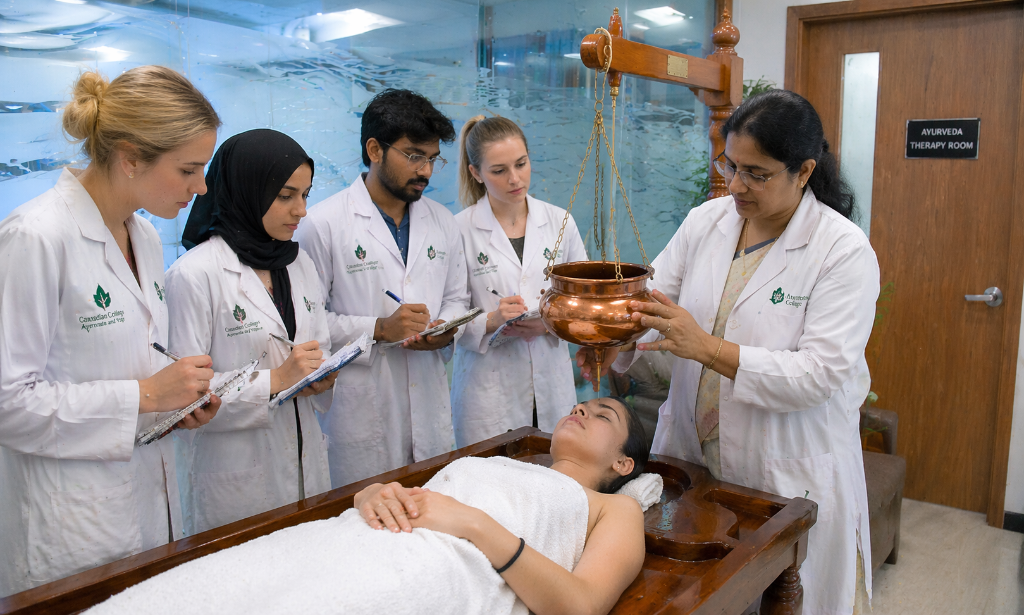
The Diploma in Ayurveda at the Canadian College of Ayurveda and Yoga is designed to provide students with extensive education in the principles, philosophy, materia medica, diagnostic methods, and clinical applications of Ayurveda.
This graduate-level program offers a structured learning pathway for students who wish to build a strong foundation in traditional Ayurvedic knowledge while also understanding relevant modern biomedical concepts. The curriculum integrates classroom learning, practical training, and supervised clinical exposure.
Students are introduced to Ayurveda as a traditional system of wellness that emphasizes balance, lifestyle, nutrition, individualized care, and natural therapeutic approaches.
What Students Will Study
The program is organized across four modules covering core areas of Ayurvedic education
Core Ayurvedic Studies
- Fundamental Concepts in Ayurveda
- Philosophy of Ayurveda
- Ayurvedic Physiology
- Ayurvedic Pathology
- Ayurvedic Diagnostic Methodology (Nidana)
- Chakra Diagnostic Method
- Ayurvedic Clinical Applications
- Steps in Methodology of Examination
Herbal and Pharmacy Studies
- Ayurvedic Herbology I
- Ayurvedic Herbology II
- Ayurveda Pharmacy
- Traditional Herbal Preparation Concepts
Biomedical Foundations
- Western Anatomy
- Western Physiology
- Introduction to Human Anatomy
- Introduction to Human Physiology
Practical and Clinical Learning
- CPR and First Aid
- Practicum / Supervised Ayurvedic Clinics
- Hands-on Training and Guided Exercises
Learning Outcomes
Understand the philosophical and theoretical foundations of Ayurveda
Develop working knowledge of Ayurvedic physiology, pathology, and clinical principles
Learn core herbology and traditional formulation concepts
Build confidence in client assessment using Ayurvedic methods
Strengthen practical skills through supervised clinic exposure
Apply lifestyle, dietary, and traditional wellness principles in case-based settings
Admission Requirements
High school diploma or equivalent
Minimum age of 18 years
English proficiency (IELTS, CELPIP, or equivalent OSSD-level proficiency)
Career Pathways
Graduates may explore a range of wellness-focused opportunities depending on applicable local laws, regulations, and individual qualifications.
Important Note: Professional practice opportunities, titles, memberships, and registration requirements vary by jurisdiction and regulatory framework. Students should independently verify all current requirements with the relevant professional associations, certifying bodies, and provincial or federal authorities.
Why Study at CCAY
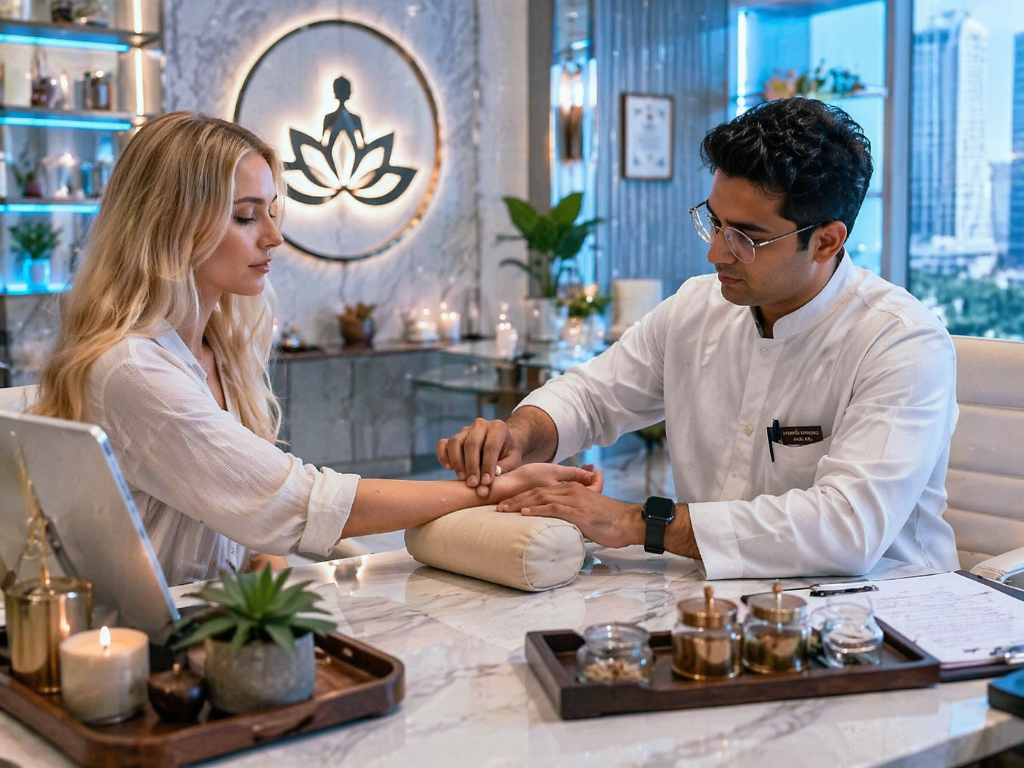
At the Canadian College of Ayurveda and Yoga, students learn in a diverse environment designed to support both theoretical understanding and practical development.
Program Structure Overview
Module 1
Foundations, history, philosophy, and introductory anatomy/physiology
Module 2
Ayurvedic physiology, herbology, and diagnostic principles
Module 3
Pathology, pharmacy, examination methods, and clinical reasoning
Module 4
Clinical applications, supervised practicum, and applied case-based learning
Build a Strong Foundation in Ayurveda
One of the world's oldest systems of wellness — now available as a structured graduate diploma in Canada.
This program page is intended for educational and informational purposes. Any references to professional opportunities, certifications, memberships, or registration pathways are subject to change and depend on the rules of the relevant governing or professional body. Prospective students are encouraged to verify current requirements independently before enrolling.